Meth Testing Support — New Zealand Wide
Practical meth testing support for landlords, property managers, property owners, and tenants who need a clear starting point — whether that is a DIY screening-kit pathway, a point-in-time baseline record, report review, or formal detailed testing arranged through a qualified independent testing partner where required.
Detections provides DIY screening-kit pathways, report review, practical guidance, and testing coordination across New Zealand. Where formal detailed testing, paid professional testing, or independent testing is required, we coordinate with qualified independent third-party testing partners.
Practical guidance only — not legal advice.
The New 2026 Meth Regulations, Tenancy Services & Useful Links
Use these links to access the key official references, understand the 2026 methamphetamine framework, check the relevant standard, and move to the most appropriate next pathway — whether that is meth testing, baseline assessment, decontamination, pre-purchase quote support, or practical property advice.
Official Meth Rules & Reference Sources
- Residential Tenancies Meth Regulations 2026 — NZ LegislationThe official 2026 rental-property methamphetamine framework.
- Tenancy Services — Meth and rental propertiesGovernment guidance for managing meth in rental properties.
- NZS 8510:2017 — Standards New ZealandThe standard for testing and decontaminating properties.
Meth Testing & Baseline Assessment Pathways
- New 2026 Meth RegulationsA clear guide to the 2026 meth rules, thresholds, and testing.
- Meth Testing ServicesPractical testing options, from DIY kits to detailed assessments.
- BaseTest — Baseline Meth TestingBaseline testing for a clear point-in-time property record.
- Meth Pre-Purchase & Property Risk QuotesPaid meth due-diligence before purchase or property decision-making.
Different situations call for different testing pathways. Detections helps landlords, property managers, buyers, sellers, and property owners identify the right starting point — from simple screening through to detailed independent assessment where required.
Note: Screening can be useful as a first step, but it does not create a decontamination scope. Where results need to be relied on, detailed assessment by an appropriately qualified independent provider may be required.
Which situation applies?
Rental property / tenancy testing
For landlords, property managers, rental homes, tenancy changes, suspected contamination, failed screening results, detailed testing, and post-decontamination testing.
Private, sale/purchase, insurance or finance-related testing
For buyers, sellers, owner-occupiers, insurers, lenders, and private property checks where the required benchmark may depend on the parties relying on the result.
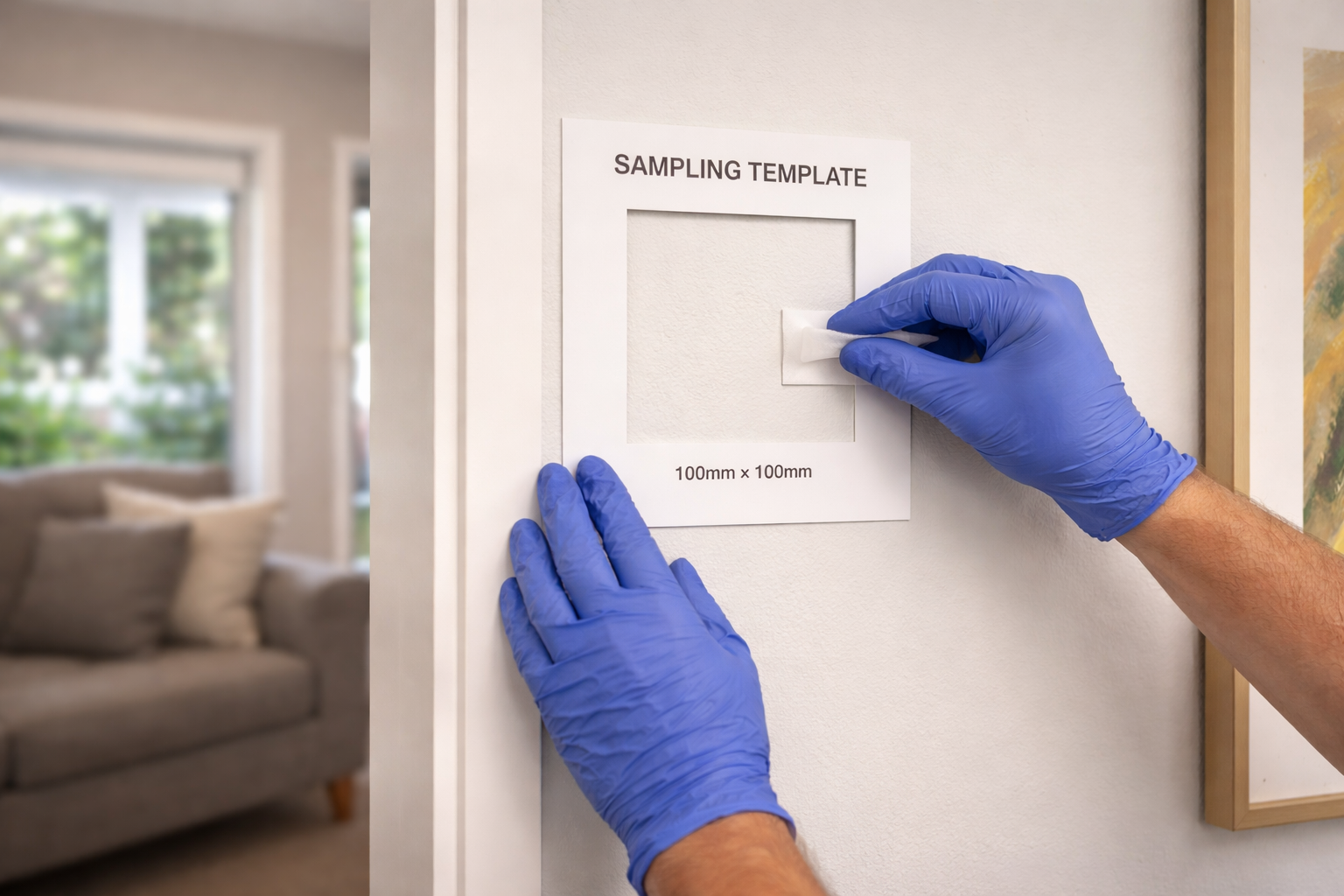
Rental-property testing needs to be considered under the Residential Tenancies meth framework. Private, sale/purchase, insurance, or personal checks depend on the parties involved. Detections can help identify the right starting point while keeping screening, detailed assessment, and decontamination scope clearly separate.
Screening vs. Detailed Assessment
It is important to understand the difference between screening and a detailed assessment.
Screening
(Such as a DIY kit or lab composite screening). Indicative only. It provides a first-pass indication of whether meth residue may be present. A lab composite screening result does not create a decontamination scope.
Detailed Assessment
A formal, room-by-room or area-by-area process carried out by an appropriately qualified independent testing provider. It is used to confirm the exact levels and locations of contamination to inform the next formal steps.
DIY Lab Composite Screening Kit
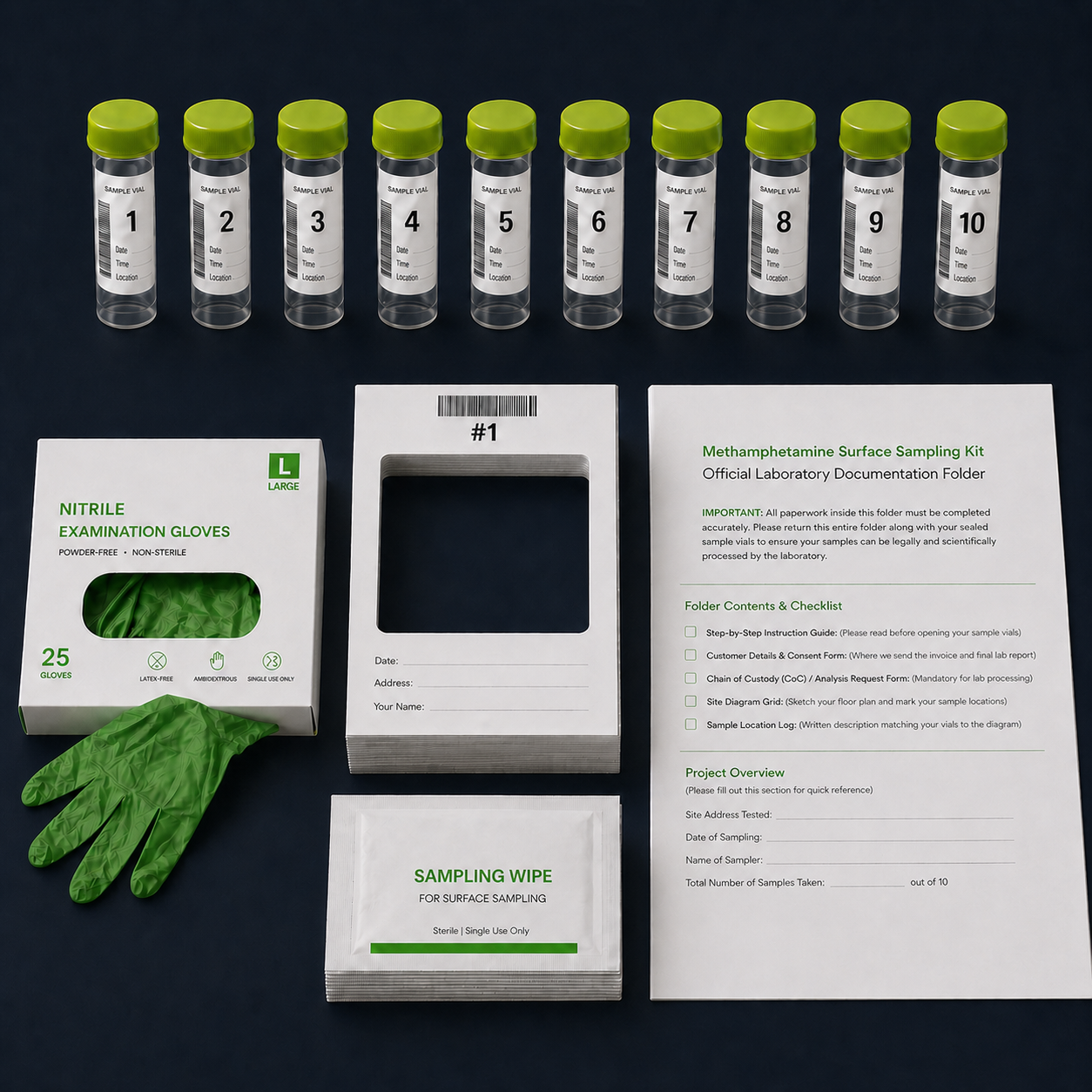
A lower-cost first step for people who want to collect samples themselves. Provides an initial indication of whether meth residue may be present. Includes 10 lab swabs.
Lab Composite Screening via Testing Agent
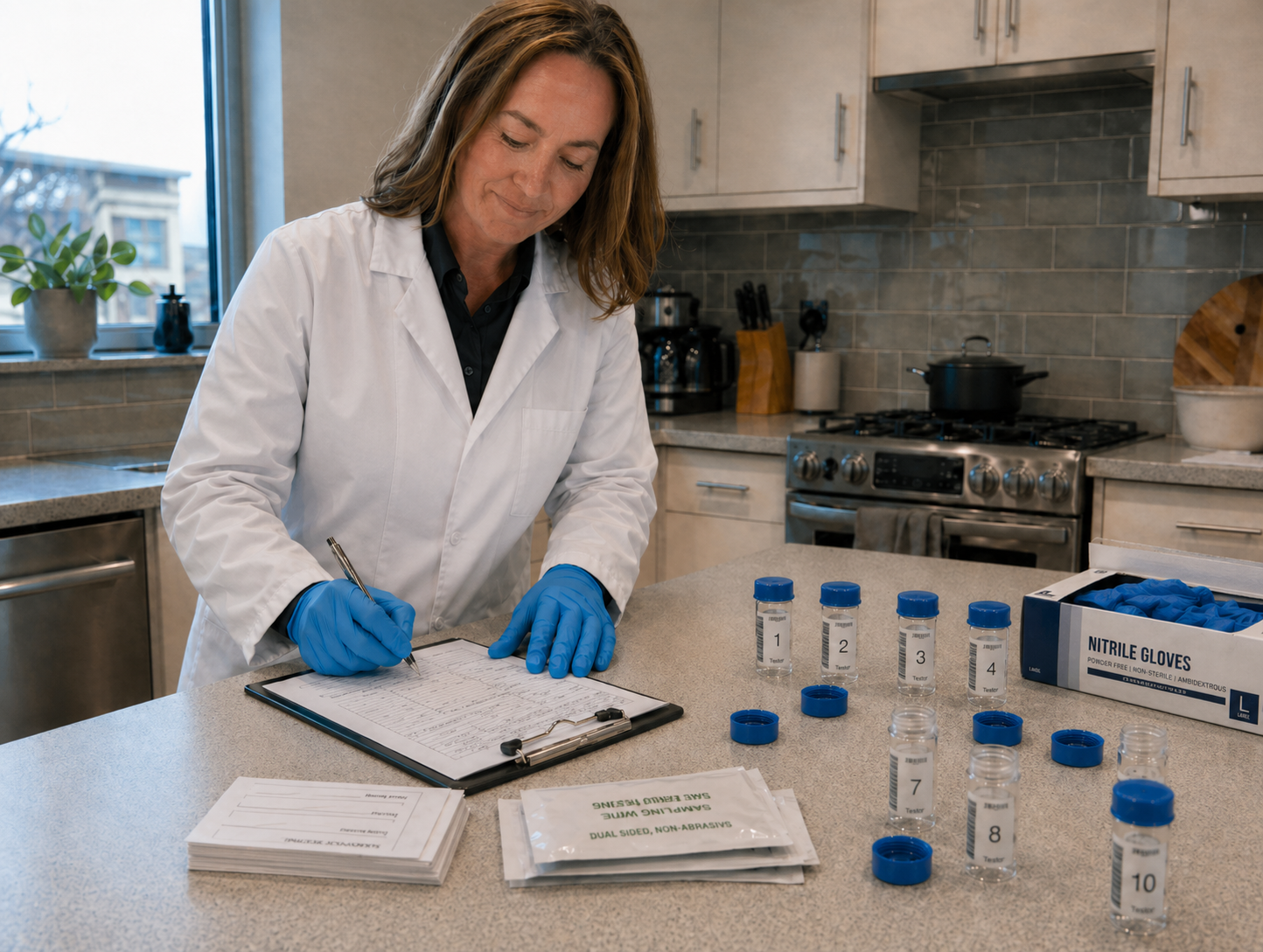
A cost-effective option where a testing agent collects samples for laboratory composite analysis. The result can indicate whether further detailed testing may be required.
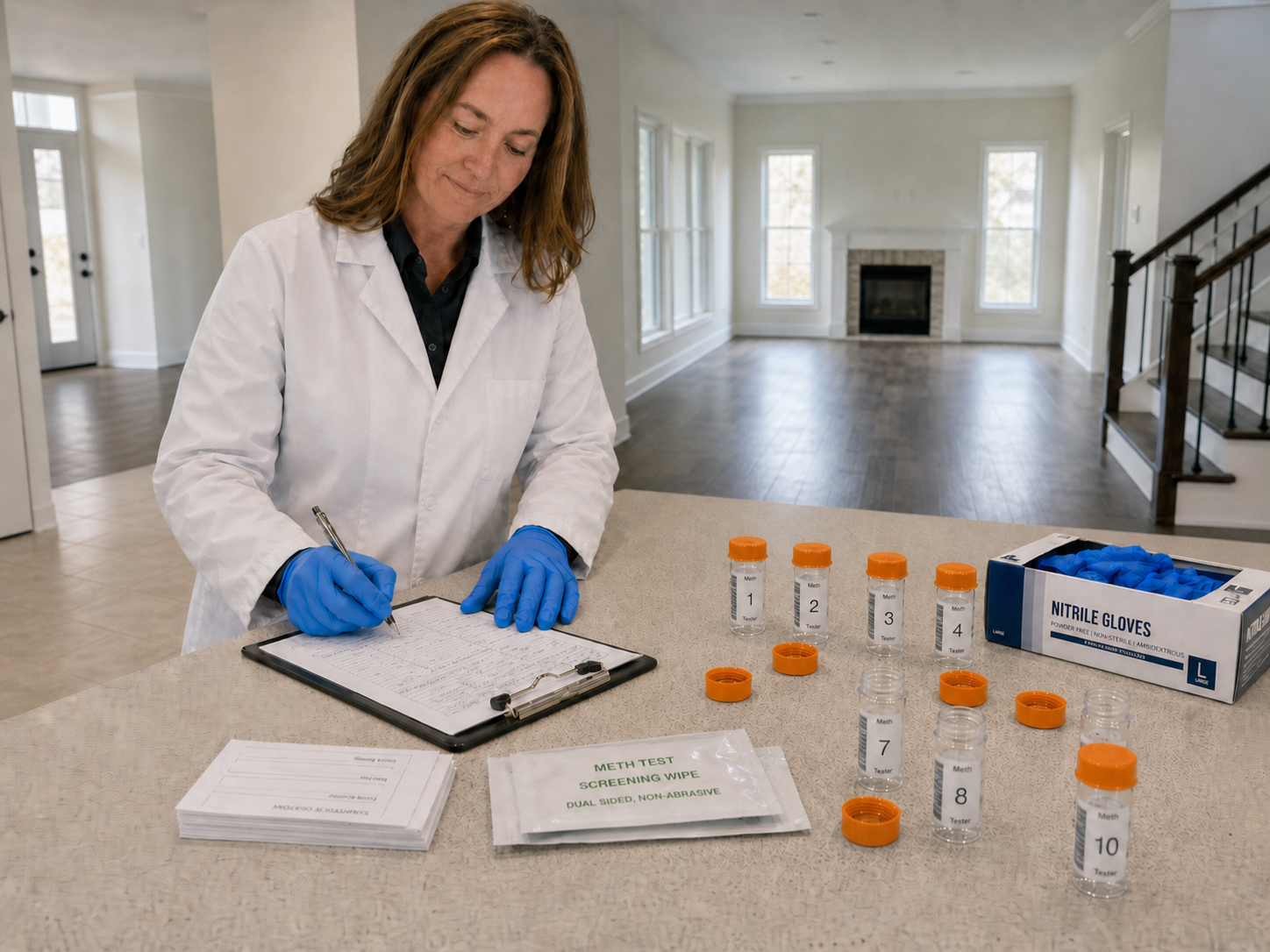
BaseTest by Detections
Explain BaseTestA practical point-in-time property record coordinated by Detections. Useful before or between tenancies as a baseline check, but not a substitute for formal independent detailed assessment.
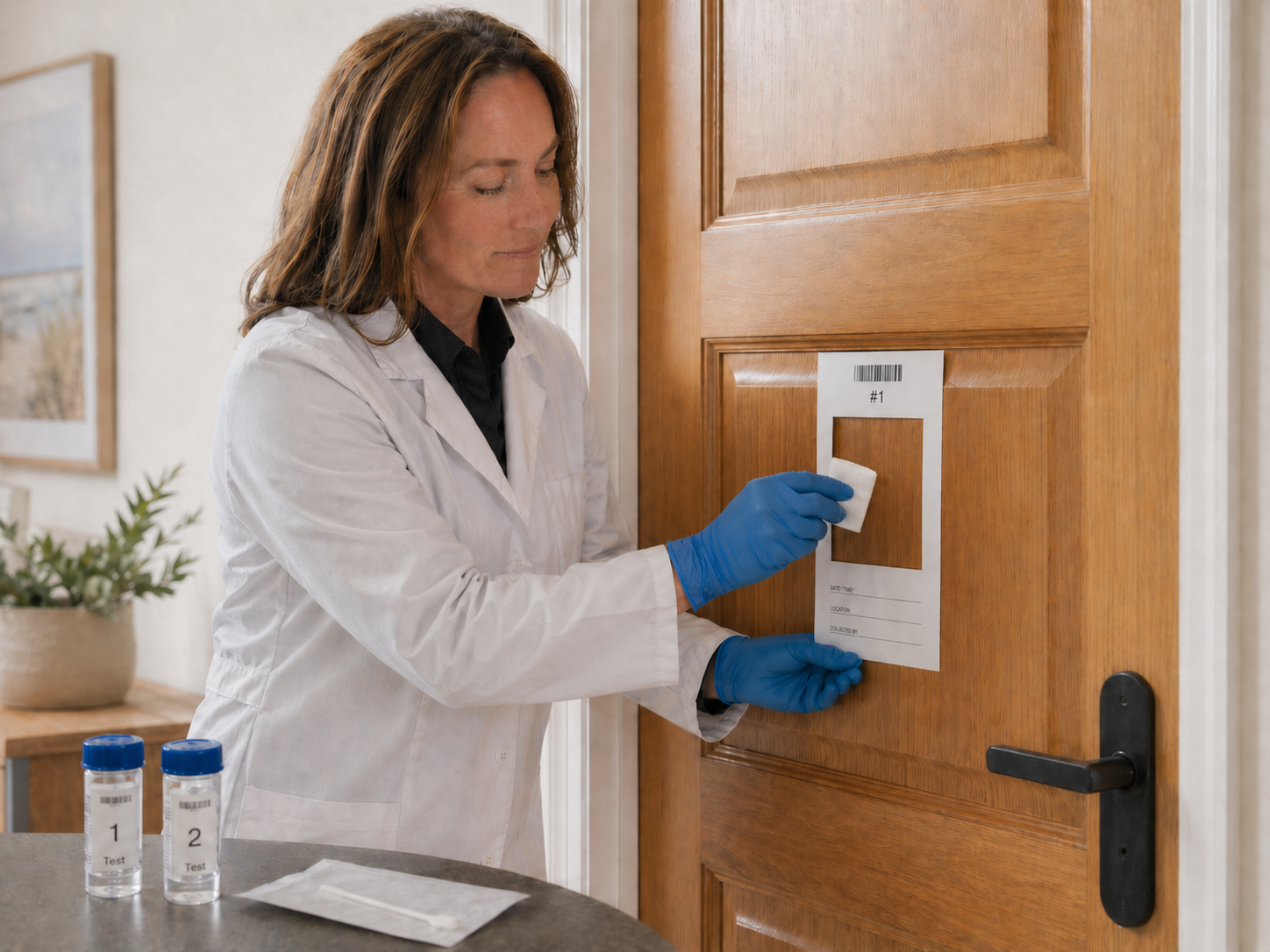
Detailed Assessment / Pre-Decontamination Testing
Formal area-by-area testing coordinated through a qualified independent provider. Required when a positive screening result or specific compliance need means detailed testing is the necessary next step.
What happens if a result is elevated?
Screening is indicative only. If a valid screening assessment in a residential tenancy context indicates contamination above 15 µg/100 cm² and the landlord is notified, the landlord must arrange prescribed detailed testing as soon as practicable. A lab composite screening result does not create a decontamination scope. Only the room-by-room results from a formal detailed assessment determine the required decontamination scope for affected areas.
Accredited Provider & Controlled Booking
Where detailed testing is required, it must be carried out by an appropriately qualified independent testing provider using the required method for the situation. Detailed Assessment / Pre-Decontamination Testing is a controlled booking, not an automatic dispatch. The scope must be reviewed based on the property size, rooms or areas involved, surface types, purpose of testing, and independence requirements. Our team will review your situation and coordinate with an appropriate independent provider before the job is confirmed.
Independence & Post-Decontamination Testing
Where decontamination results need to be relied on — especially in residential tenancy matters — independent post-decontamination testing by an appropriately qualified provider must remain separate from the decontamination contractor. The independent testing result confirms whether affected areas are below the applicable threshold.
Things to Consider
How the Meth Testing Process Works
From the initial concern through to a confirmed result — what typically happens, and what each step means in practice.
Concern raised
A meth concern may arise from a tenancy issue, previous result, due-diligence check, or need for a property record.
Choose a starting test
A DIY screening kit, BaseTest, or lab composite pathway may be suitable depending on the purpose of testing.
Detailed testing arranged if required
If a valid screening result triggers the next stage, independent detailed testing may be required.
Results reviewed
Detailed results are assessed by room, space, or area to identify what the result means.
Next step confirmed
The result helps determine whether no action, further testing, or decontamination is required.
For the full legal framework — including contamination obligations, notice provisions, and what the results mean for landlords and tenants — see the Meth Regulations page.
Frequently Asked Questions
Practical answers to common questions about meth testing pathways, who can test, what results mean, and what happens next.
Screening is an initial-stage check that can be carried out using an approved method, which may include a compliant meth test kit or laboratory composite swab sampling. It provides an early indication of whether meth residue may be present. Detailed testing is the formal, professional stage that follows when a screening result indicates possible contamination above 15 µg/100cm², or when a landlord needs an area-by-area result for compliance purposes. The two serve different purposes and should not be treated as interchangeable.
Yes. Any person — including a landlord, tenant, property manager, or property owner — can carry out a valid screening assessment using an approved method correctly. DIY screening is a first-pass indication, not a substitute for detailed area-by-area testing where that is required. If a valid screening result shows contamination above 15 µg/100 cm² and the landlord is aware of it, detailed testing must be arranged through a qualified independent testing provider.
No. There is no legal requirement under the 2026 Regulations for routine meth testing between tenancies. Landlords can still arrange testing if they believe it is warranted. A baseline test can also be a practical record-keeping step — whether before a new tenancy begins, between tenancies, or as a point-in-time record where a landlord wants documented evidence of the property's condition.
If a valid screening result indicates contamination above 15 µg/100 cm², and the landlord becomes aware of this, detailed testing must be arranged through a qualified independent testing provider. Under the Residential Tenancies (Managing Methamphetamine Contamination) Regulations 2026, the screening result alone does not confirm contamination — it triggers the next stage of the formal pathway. Detections can help coordinate independent testing, but where decontamination work may be involved, the testing provider must remain independent of the decontamination contractor.
Laboratory composite testing is a method where swab samples taken from multiple locations within a defined area are combined and sent to a laboratory for a single analysis. The composite result reflects the aggregate residue level across those sample points. It is commonly used in screening to reduce cost while covering a wider area. If the composite result is above 15 µg/100cm², and the landlord is aware, detailed testing must be arranged. A composite result cannot substitute for the room-by-room results produced by detailed testing under the 2026 Regulations.
Decomposite meth testing is a follow-up process that may be available after a laboratory composite screening test. Where the original samples were grouped and retained by the laboratory, those grouped samples may be analysed further to help identify which part of the property contributed to the composite result. This can help narrow down the next step and may avoid unnecessary assumptions about the whole property. However, decomposite testing should not be treated as an automatic substitute for formal detailed meth assessment. Where the Regulations require detailed testing, the detailed assessment must still meet the prescribed method and be carried out by a qualified independent testing provider where independence is required. Availability depends on how the original samples were collected, grouped, submitted, and stored by the laboratory. Additional laboratory or provider charges may apply.
A non-detect result means that meth residue was not detected at or above the detection limit of the method used. It does not necessarily mean there is zero meth present — it means the concentration was below the threshold the test can reliably measure. For screening purposes, a non-detect result is typically a reassuring indicator. For detailed testing, a non-detect or below-threshold result means the area does not meet the contamination definition under the 2026 Regulations and no decontamination is required for that area. The detection limit of the method used should always be considered when interpreting results.
The DIY Meth Screening Test Kit, BaseTest, and Testing Agent Lab Composite Meth Screening each include 10 swabs. Testing Agent Detailed Meth Assessment is scoped per swab / per sample, depending on rooms, areas, property size, and assessment requirements.
A screening test is usually a first-pass indication, while BaseTest is positioned as a clearer point-in-time property record. BaseTest may be useful before a tenancy, between tenancies, or where stronger documentation is wanted.
If a valid screening result indicates contamination above the applicable threshold and the landlord is made aware, detailed testing may be required. See the Meth Regulations for the full framework.
Detailed testing provides room-by-room or area-by-area results. Composite screening can indicate whether meth residue may be present, but it does not provide the same room-by-room detail unless further analysis is available and appropriate.
Coordination may be possible, but where independence is required, detailed testing and post-decontamination testing must remain independent of the decontamination contractor. See the Meth Regulations for deeper detail.
Affected areas may need decontamination. Where remediation is required, testing and verification should remain independent of the decontamination contractor. See the Meth Regulations for the full framework.
Ready to discuss your property?
Get in touch to identify the right testing pathway and find a practical way forward.